Best Face Wash for Oily Skin: Activated Charcoal Face Wash Guide
June 2, 2026 2026-09-17 11:06Best Face Wash for Oily Skin: Activated Charcoal Face Wash Guide

Best Face Wash for Oily Skin: Activated Charcoal Face Wash Guide
If you have oily skin, you already know the routine. You wash your face, and within an hour it looks shiny again. Your pores seem visibly enlarged. Breakouts come and go without much warning. You’ve probably tried multiple cleansers, and most of them either stripped your skin completely dry or did nothing noticeable at all.
The problem with most cleansers designed for oily skin is that they overcorrect. They remove so much oil that the skin goes into panic mode and produces even more to compensate. It’s a cycle that keeps a lot of people frustrated for years.
Activated charcoal changes that equation in a fairly meaningful way. This guide explains how it works, what’s inside this formulation, and why it’s worth understanding before you add another cleanser to your routine.
Why Oily Skin is More Complicated Than It Looks
Oily skin isn’t just about genetics, though that plays a role. It’s also driven by diet, humidity, hormonal fluctuations, stress, and often by using the wrong skincare products. When the sebaceous glands are overactive, they produce excess sebum that sits on the skin’s surface, mixes with environmental pollutants and dead skin cells, and gradually clogs pores.
Clogged pores are the starting point for almost everything people with oily skin complain about: whiteheads, blackheads, enlarged pores, and acne. The bacteria that cause inflammatory acne thrive in the oxygen-deprived environment of a blocked follicle.
A good oil control face wash doesn’t just clean the surface. It needs to go into the pore, clear the buildup, and do it without disrupting the skin’s natural moisture barrier. That last part is where most drugstore cleansers fail.
What Activated Charcoal Actually Does
Activated charcoal is not the same as the ash from burnt wood. It’s a processed form of carbon that has been treated to create an extremely porous surface structure. Under a microscope, a single gram of activated charcoal has a surface area that can exceed 500 square metres.
That porosity is the entire mechanism. Activated charcoal works through a process called adsorption — where particles of dirt, excess oil, toxins, and pollutants bind to the surface of the charcoal and get lifted out of the pore when you rinse. It doesn’t chemically react with the skin; it physically draws out what’s clogging it.
This is why it works particularly well for people living in urban environments where skin is constantly exposed to pollution, dust, and particulate matter. Regular cleansers emulsify what’s on the surface. Activated charcoal pulls out what’s inside the pore.
The Ingredients in This Formulation
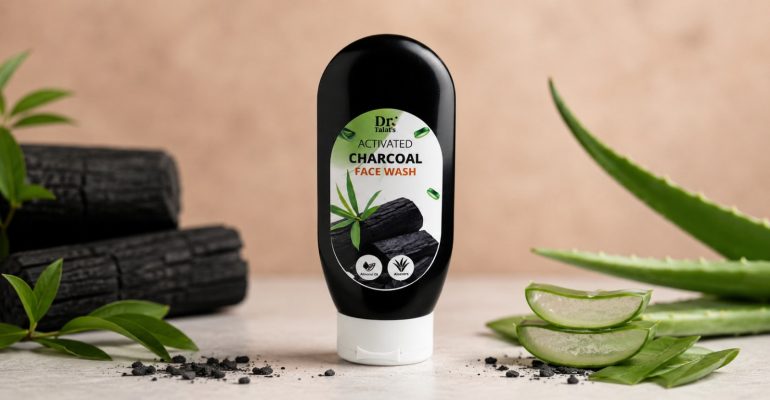
1. Activated Charcoal
The primary active, and the one doing the deepest cleansing work. It targets the excess sebum, blackheads, whiteheads, and environmental buildup that accumulate in pores over the course of a day. With consistent use, pores appear tighter because they’re no longer stretched by buildup.
2. Aloe Vera Juice
This is a critical balancing ingredient. Activated charcoal is powerful, and without something to counteract potential dryness, it can leave skin feeling tight. Aloe vera juice hydrates and soothes the skin simultaneously, making sure the cleansing action doesn’t compromise the skin barrier. It also has mild antimicrobial properties that support acne-prone skin.
3. Almond Oil
A lightweight, non-comedogenic oil that conditions the skin while cleansing. The inclusion of almond oil is a smart formulation decision because it prevents the “squeaky clean” feeling that signals your skin has been stripped. It’s rich in Vitamin E and fatty acids that nourish the skin without blocking pores.
4. Wheatgerm Oil
Wheatgerm oil is one of the most nutrient-dense plant oils available. It contains high concentrations of Vitamin E, Vitamin B complex, and essential fatty acids. For oily and acne-prone skin specifically, it supports skin regeneration and helps fade post-acne marks over time.
5. Amla (Emblica officinalis)
Amla is a cornerstone ingredient in Unani medicine, and its role here extends beyond simple cleansing. It’s exceptionally rich in Vitamin C and antioxidants that protect the skin from oxidative stress caused by pollution and UV exposure. It also brightens the complexion gradually and supports collagen health in the skin.
Sulphate-Free and Paraben-Free — Why It Matters
Most commercial face washes rely on sulphates (like sodium lauryl sulphate) to create lather. Sulphates are effective at removing oil, but they’re also harsh enough to strip the skin’s natural lipid barrier. When that barrier is compromised, skin becomes reactive, red, and paradoxically more prone to oiliness because it tries to compensate.
This formulation is sulphate-free. The cleansing action comes from the activated charcoal and the surfactant base, not from aggressive foaming agents. The result is effective cleaning without the damage.
It’s also paraben-free. Parabens are preservatives with a documented potential for hormonal disruption, and in a product used daily on the face, avoiding them is a reasonable choice.
How To Use It
Rinse your face with water first. Take the required amount of facewash on your fingertips, apply it evenly across your face, and massage gently in circular motions. Then rinse off thoroughly and pat your face dry.
Two things worth noting: the circular massage motion isn’t just technique — it stimulates circulation and helps the charcoal work into the pore rather than just sitting on the surface. And patting dry (rather than rubbing) preserves the skin barrier.
What to Expect With Regular Use
In the first few days, you’ll notice your skin feels genuinely clean rather than stripped. The tight, dry feeling that many strong cleansers leave behind is absent here because of the aloe and almond oil in the formulation.
Over two to three weeks of daily use, most people see a reduction in blackheads and congestion, a less shiny appearance through the day, and a gradual improvement in skin clarity. Pores appear smaller — not because anything physically shrinks them, but because they’re no longer filled with debris that was stretching them.
Post-acne marks also tend to fade more consistently with regular use, which is the combined effect of the amla brightening action and the improved overall skin health that comes from keeping pores clear.
A Note on Oily Skin and Moisturising
One of the most common mistakes people with oily skin make is skipping moisturiser, especially after using an active cleanser. Oily skin is not the same as well-hydrated skin. You can have an oily surface and dehydrated skin underneath at the same time. After using this facewash, a lightweight, non-comedogenic moisturiser is still recommended — your skin will produce less excess oil when it isn’t trying to compensate for dehydration.
The Bottom Line
The best charcoal face wash for oily skin is not the one that makes your skin feel the most “clean” right after washing. It’s the one that manages oil production sustainably, clears congestion without damaging the barrier, and improves your skin’s condition over weeks of consistent use rather than just masking the problem for a few hours.
This formulation does that through a combination of deep-pore activated charcoal, skin-soothing aloe, conditioning almond and wheatgerm oils, and the Unani staple amla — without sulphates or parabens that would undermine everything else in the bottle.