Struggling with Hair Growth? Here’s How Maswal Gel Can Help
June 2, 2026 2026-09-17 11:06Struggling with Hair Growth? Here’s How Maswal Gel Can Help

Struggling with Hair Growth? Here’s How Maswal Gel Can Help
Most people dealing with thinning hair or a receding hairline go through the same frustrating cycle. They try oil after oil, shampoo after shampoo, maybe a few expensive serums — and see very little change. What they don’t realise is that the format of the product matters just as much as the ingredients inside it.
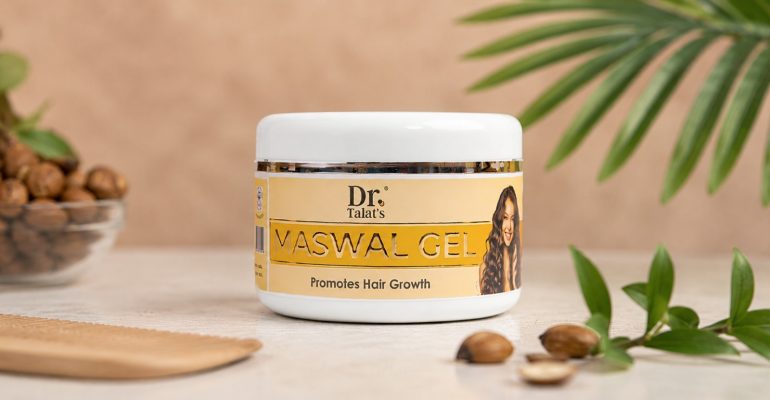
Oils are excellent for conditioning and scalp nourishment. But when it comes to targeted hair growth, especially at the hairline and areas with visible thinning, a gel has a distinct advantage. It stays where you apply it, doesn’t slide off the scalp, and allows active ingredients to penetrate the follicle through prolonged skin contact. That’s the entire premise behind Maswal Gel.
What Makes a Hair Growth Gel Different From an Oil
When you apply oil to the scalp, it distributes broadly and absorbs over time. That’s useful for general nourishment. But for targeted forehead hair growth or thinning areas that need focused attention, you want something that stays put — especially through the night when the scalp is not exposed to sweat, sun, or external interference.
A gel base does exactly that. It adheres to the scalp surface, keeps the actives concentrated over the follicle, and allows a longer window of absorption. For areas like the temples, hairline, and crown where thinning tends to be most visible and most distressing, this localised delivery makes a real difference.
The Ingredients in Maswal Gel and What They Do
The formulation draws entirely from Unani botanical tradition. Each ingredient here has a specific physiological role, not just a cosmetic one.
1. Gheekwar (Aloe Vera)
In Unani medicine, Gheekwar has been used for centuries as a treatment for scalp conditions and hair fall. Its active enzyme, aloesin, inhibits excess melanin production and reduces scalp inflammation — one of the most underrecognised drivers of hair thinning. Beyond that, aloe creates a protective, hydrating film over the scalp that reduces dryness and keeps the skin environment around the follicle calm and receptive.
For people whose hair thinning is accompanied by an itchy, flaky, or irritated scalp, this ingredient alone addresses a major part of the problem. A healthy scalp is the foundation that everything else builds on.
2. Rogan-e-Badam Shireen (Sweet Almond Oil)
This is one of the most valued carrier oils in Unani formulation. Rogan-e-Badam Shireen is rich in Vitamin E, magnesium, and omega fatty acids — nutrients that directly feed the hair follicle and strengthen the hair shaft from within.
What makes it particularly relevant for a hair growth gel is its ability to improve blood microcirculation at the scalp level. Better circulation means more nutrients and oxygen reaching the follicle, which is the physical prerequisite for active hair growth. It also works on the hair shaft itself, reducing brittleness and breakage that can make thinning appear far worse than the actual follicle count suggests.
3. Roghan-e-Kunjad (Sesame Oil)
Sesame oil, known in Unani as Roghan-e-Kunjad, is one of the few plant oils that genuinely penetrates the scalp rather than sitting on the surface. It contains sesamol and sesamolin, two powerful antioxidants that protect follicles from oxidative damage — a significant factor in age-related and stress-related hair thinning.
It also has natural warming properties that gently stimulate circulation when applied to the scalp, which supports follicle activity. In Unani practice, it has been classified as a mufatteh (opening) agent, meaning it helps open blockages in the channels supplying the follicle. Modern understanding maps this closely to its vasodilatory and anti-inflammatory effects.
4. Roghan-e-Ustakhudoos (Lavender Oil)
This is the ingredient that separates Maswal Gel from most conventional hair growth products. Roghan-e-Ustakhudoos, or lavender oil, has been the subject of increasingly serious clinical research in the context of hair loss.
A study published in Toxicological Research found that lavender oil applied topically increased the number of hair follicles, deepened follicle depth, and thickened the dermal layer in a comparable manner to minoxidil — one of the most widely used pharmaceutical hair growth treatments. The mechanism appears to involve inhibition of the 5-alpha reductase enzyme, which is the same pathway targeted by several prescription hair loss drugs. It also has documented antimicrobial effects that help keep the scalp environment clean and free from the fungal or bacterial interference that can disrupt follicle function.
In Unani classification, Ustakhudoos has been used as a muqawwi-e-asab (nerve strengthener) and circulation activator. Both of these properties are directly relevant to follicle stimulation.
The Combination Effect
What makes this formulation work as a whole is how these four ingredients complement each other. Gheekwar calms and hydrates the scalp environment. Rogan-e-Badam Shireen feeds the follicle and reduces breakage. Roghan-e-Kunjad penetrates deep and protects against oxidative damage. Roghan-e-Ustakhudoos actively stimulates follicle activity and controls the hormonal pathway associated with pattern thinning.
Each ingredient is doing something different, and together they address hair thinning from multiple angles simultaneously — scalp health, follicle nutrition, circulation, and hormonal interference. That layered approach is characteristic of how Unani medicine approaches complex problems.
Who This Gel Is Most Useful For
Maswal Gel is particularly suited for people dealing with a receding hairline or forehead thinning, gradual density loss at the crown or temples, hair that breaks easily and appears sparse, a dry or irritated scalp accompanying the hair loss, and thinning that has developed over a period of months or years rather than sudden dramatic shedding.
It is suitable for both men and women. Hormonal pattern thinning in men typically presents at the temples and crown, while in women it tends to show as diffuse thinning across the top of the scalp and hairline — both patterns are addressed by this formulation’s mechanism.
How to Use It
Apply Maswal Gel directly on the scalp during nighttime. The overnight application is intentional. Skin cell renewal and follicle repair are most active during sleep, and applying the gel at this window means the actives are working during the body’s own natural repair cycle. There’s no rinsing required before bed, and it can be washed off in the morning as part of your normal routine.
Focus application on the areas showing the most thinning — the hairline, temples, or crown — rather than spreading it across the entire scalp. A concentrated application on the areas that need it most will deliver better results than a thin layer everywhere.
What to Expect and When
Hair growth operates on a biological timeline that no product can override. The average follicle takes four to six weeks to complete one growth cycle, and visible density changes typically become apparent after eight to twelve weeks of consistent nightly use.
What most people notice first, usually within the first two to three weeks, is a reduction in hair fall during washing and combing. This is because the scalp environment is improving and the existing hair is becoming stronger. New growth at the hairline and thinning areas follows over the subsequent weeks.
Consistency is the only variable entirely in your control. The formulation does its work — but only if it’s applied regularly.
A Note on Unani and Hair Loss
Unani medicine has always approached hair loss as a symptom of imbalance rather than just a cosmetic inconvenience. The focus is on restoring the conditions the follicle needs to function — circulation, nutrition, a clean scalp environment, and protection from inflammatory and hormonal disruption.
Maswal Gel is built on exactly this philosophy. The ingredients are not chosen for marketing appeal. They are chosen because within Unani formulation tradition, and increasingly within modern botanical research, they have documented roles in creating the conditions for follicular recovery and sustained hair growth.