6 Reasons to Switch to a Natural Organic Shampoo Today
June 3, 2026 2026-09-17 11:066 Reasons to Switch to a Natural Organic Shampoo Today

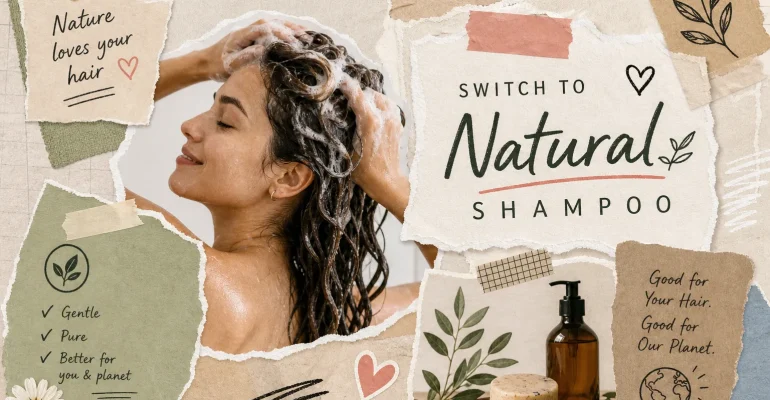
6 Reasons to Switch to a Natural Organic Shampoo Today
You’ve been here before. A new shampoo promises thicker hair, a cleaner scalp, less fall. You use it for a month, maybe two. Things feel better at first, then slowly go back to exactly where they started. So you try the next one. And the next. The shampoo shelf in your bathroom becomes a graveyard of good intentions.
The problem usually isn’t your hair. It’s what’s in the bottle. Most conventional shampoos are built around surfactants and preservatives designed for shelf life and lather, not scalp health. Once you understand what those ingredients are actually doing, switching to a natural organic shampoo, one free of synthetic sulfates, parabens, and silicones, stops feeling like a lifestyle choice and starts feeling like the obvious decision.
This guide covers what to stop using, what to look for, and how to make the transition without giving up in week two. Brands like Dr. Talat’s draw on Unani herbal medicine to formulate products that clean without stripping and treat without synthetic additives. Here’s what you need to know.
What conventional shampoos are quietly doing to your hair
The sulfate problem most people don’t know about
Sodium lauryl sulfate (SLS) and sodium laureth sulfate (SLES) are strong anionic surfactants widely used in cleaning applications and in many shampoos because they foam well and remove oil effectively. That stripping is the problem. Your scalp has a natural sebum layer that protects the follicle and maintains the skin barrier. With regular use, sulfates can strip those natural oils and disrupt the skin barrier, leaving the scalp dry and reactive.
Your scalp responds the only way it knows how: by producing more oil to compensate. This is why many people feel their hair gets greasier faster than it used to. The shampoo creates the problem it claims to solve, and you end up washing more often because of it. For a useful primer on gentler alternatives to industrial detergents, see this beginners’ guide to natural surfactants that explains how plant-derived surfactants work without the same level of stripping.
Parabens, silicones, and the buildup nobody sees
Parabens are preservatives added to extend shelf life. Some consumers are concerned about cumulative exposure from daily-use products like shampoo, and some research examines dermal absorption, though the evidence is still developing. Silicones are a different issue: they coat the hair shaft, creating immediate shine that looks like healthy hair but isn’t. Over time, that coating can cause perceived buildup, leave hair feeling weighed down, and create a dependency where hair only looks decent when the product is present.
This buildup is invisible, which is why most people don’t connect it to the dullness, heaviness, or breakage they’re experiencing. A paraben-free, silicone-free formula isn’t just a cleaner ingredient list. Within several weeks of consistent use, most people notice a genuinely different result, lighter hair, less buildup, and a scalp that feels more settled.
6 reasons to switch to a natural organic shampoo today
Reasons 1 to 3: what your scalp gains immediately
The first reason is scalp balance. When you remove sulfates from your routine, the stripping-and-overproduction cycle stops. Your scalp stops overcorrecting with excess sebum because nothing is aggressively stripping it away. Within a few weeks, wash frequency often decreases naturally because the scalp is no longer stuck in crisis mode.
The second reason is genuine cleanliness. Without silicone buildup, hair starts to feel actually clean rather than coated. There’s a real difference between hair that looks clean because it’s been smoothed with a film, and hair that feels light and unrestricted because nothing is sitting on the shaft. Most people notice this distinction clearly once they’ve been sulfate-free for a few weeks.
The third reason is reduced synthetic chemical load. Your scalp is skin, it absorbs what you put on it, especially products applied during washing. Using a paraben-free shampoo reduces the cumulative exposure that comes from daily use of the same product. Given how often shampoo is used, this adds up more than most ingredient labels suggest.
Reasons 4 to 6: what your hair gains over time
Reason four is less hair fall and fewer flakes. Scalp inflammation is a common contributor to hair fall and dandruff. Sulfates, synthetic fragrances, and harsh preservatives can all drive low-grade scalp irritation. A sulfate-free shampoo removes those triggers, and the scalp tends to calm down noticeably over a month or two of consistent use.
Reason five is active strengthening. A well-formulated herbal shampoo doesn’t just clean. Ingredients like hibiscus, amla, and aloe deliver amino acids, antioxidants, and anti-inflammatory compounds to the scalp with every wash. Over time, that supports stronger strands and a healthier follicle environment, not just less damage.
Reason six is safety for frequent washing. Shampoos formulated without harsh synthetic detergents are gentle enough for daily use without the long-term consequences of sulfate-based products. For people who wash every day due to exercise, an oily scalp, or scalp conditions, this matters. Conventional shampoos used daily accelerate the stripping cycle; a plant-based organic hair cleanser used daily continues to nourish rather than deplete. These aren’t dramatic overnight claims. They’re what happens when you stop doing damage and let the scalp do what it’s designed to do.
Ingredients that actually earn their place in a natural organic shampoo
Why aloe vera and hibiscus work together
Aloe vera is primarily a scalp ingredient. It soothes inflammation, delivers moisture to the follicle, and creates a calming base for itchy or irritated scalps. Human studies support its role in reducing scalp scaling and itchiness, particularly in seborrheic dermatitis. It’s not a growth stimulant, but it creates the conditions a healthy scalp needs. For a readable summary of aloe’s benefits for scalp and strand health, see aloe vera’s hidden powers for scalp health.
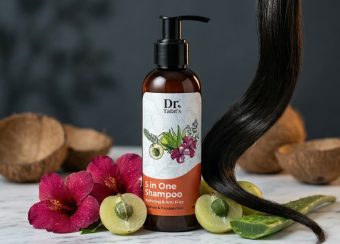
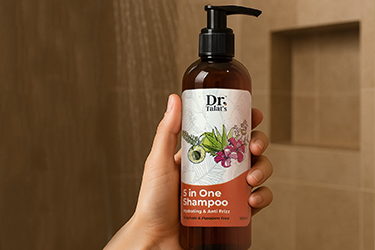
Hibiscus is where the functional haircare happens. It contains amino acids, vitamin C, antioxidants, and naturally occurring alpha-hydroxy acids that strengthen hair strands and condition the shaft without silicone. Leaf extract in particular shows activity in lab research for follicle support. Together, aloe and hibiscus address both the scalp environment and the hair shaft in a single wash. Dr. Talat’s Aloe Hibiscus shampoo is built around exactly this combination, formulated without synthetic additives that would undermine those benefits, with user-reported results indicating meaningful reductions in hair fall among regular users.
The case for amla and shikakai as a cleansing duo
Amla (Indian gooseberry) is one of the most researched herbal ingredients in traditional hair care. Rich in vitamin C and tannins, it supports the hair growth cycle and helps reduce oxidative stress at the follicle level. Some studies using amla in multi-ingredient formulations have reported reductions in hair fall, and it holds an established place in both Unani and Ayurvedic medicine for scalp health. For a summary of clinical findings, see this clinical review of amla and hair loss.
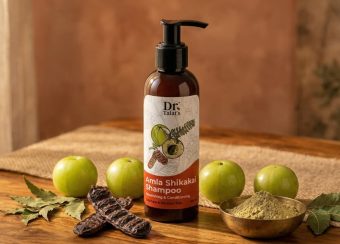
Shikakai has been used as a natural hair cleanser for centuries, and it earns that history. Its saponins provide gentle cleansing at a pH of roughly 4.5 to 5.5, close to the scalp’s natural acid mantle. It lathers softly, doesn’t strip natural oils, and keeps the scalp’s protective barrier intact. Where sulfates are industrial-strength degreasers, shikakai is a precision cleanser. If you want a deeper read on why shikakai-based shampoos are still preferred in traditional formulations, that resource covers the history and practical benefits. Dr. Talat’s Amla Shikakai shampoo brings these two ingredients together as a complete herbal hair cleanser, suited for managing hair fall and dandruff without a harsh synthetic compromise.
How to read a shampoo label before you buy
What “natural” on the label actually tells you (and what it doesn’t)
The word “natural” on a shampoo label is unregulated. A product can legally describe itself as natural while containing SLS, synthetic fragrance, silicones, and parabens. No authority in India or most other markets requires proof before that word appears on a bottle. This is where reading the actual ingredient list becomes non-negotiable.
What to look for: the first three to five ingredients should be plant-based or botanical, since ingredients are listed by weight, higher-listed botanicals indicate a greater proportion of plant content in the formula. What to look out for: sodium lauryl sulfate, SLES, methylparaben, propylparaben, dimethicone, and cyclomethicone. If those appear in the top half of the ingredient list, the product isn’t genuinely clean regardless of the front label. Certifications like COSMOS Organic or India Organic add a layer of third-party verification, but a transparent ingredient list is often its own signal.
Matching the formula to your hair concern
For hair fall and scalp health, look for amla or hibiscus in the active ingredients, both have traditional use and some supporting lab or limited clinical evidence. For dandruff, tea tree or neem paired with aloe vera targets fungal and inflammatory drivers, and tea tree in particular has stronger clinical backing for scalp conditions. For dry or damaged hair, coconut milk or aloe-based formulas without sulfate surfactants provide moisture without coating the strand in synthetics.
A good natural organic shampoo doesn’t need to claim it does everything. It needs to address your specific concern without creating new ones. Dr. Talat’s Aloe Hibiscus and Amla Shikakai shampoos are each built around specific problems, hair fall, dandruff, and scalp imbalance, with formulations designed to match those claims.
Making the transition without giving up halfway
What happens to your scalp in the first one to two weeks
The adjustment period is real, and it’s worth knowing about before you start. Your scalp has been overproducing sebum for months or years to compensate for sulfate stripping. When the stripping stops, the scalp doesn’t immediately recalibrate. For the first four to six washes, hair can feel heavier or slightly greasier than you’re used to. This is the scalp normalizing, not the new shampoo failing.
This adjustment period typically runs one to two weeks, depending on how often you wash. Most people who quit during this window do so because they weren’t expecting it. Knowing it’s coming, and knowing it’s temporary, is usually enough to get through it.
A simple switch approach that holds
Start by using your herbal shampoo twice a week alongside your existing one. By week three or four, move to full replacement. Avoid silicone-heavy conditioners during the transition, they reintroduce the buildup you’re trying to clear. Use lukewarm rather than hot water, since very hot water can strip the cuticle and interfere with the scalp’s rebalancing.
Dry shampoo can bridge the gap on heavy sebum days in the first week or two if needed. Beyond that, the process largely takes care of itself. This is one of those changes that feels unremarkable in week one and genuinely different by week eight. That’s how real results tend to work.
The switch is simpler than the shampoo aisle makes it look
Most people aren’t dealing with bad hair. They’re dealing with the wrong formula applied consistently over years. The fix isn’t complicated: stop using ingredients that strip and coat, start using ingredients that clean and nourish, and give the scalp a few weeks to recalibrate.
The decision framework is straightforward. Check the ingredient list, not the front label. Avoid sulfates, parabens, and silicones. Look for botanical actives that match your specific concern. Expect a short adjustment period and don’t mistake it for failure.
Ready to make the switch to a natural organic shampoo? Dr. Talat’s Aloe Hibiscus and Amla Shikakai shampoos are a practical starting point, both grounded in Unani herbal tradition, formulated without harsh synthetic additives, and built around organic haircare ingredients that have earned their place in the formula. The ingredient lists are transparent, the actives are purposeful, and the philosophy is a simple one: clean well, treat gently, and let the scalp do the rest.